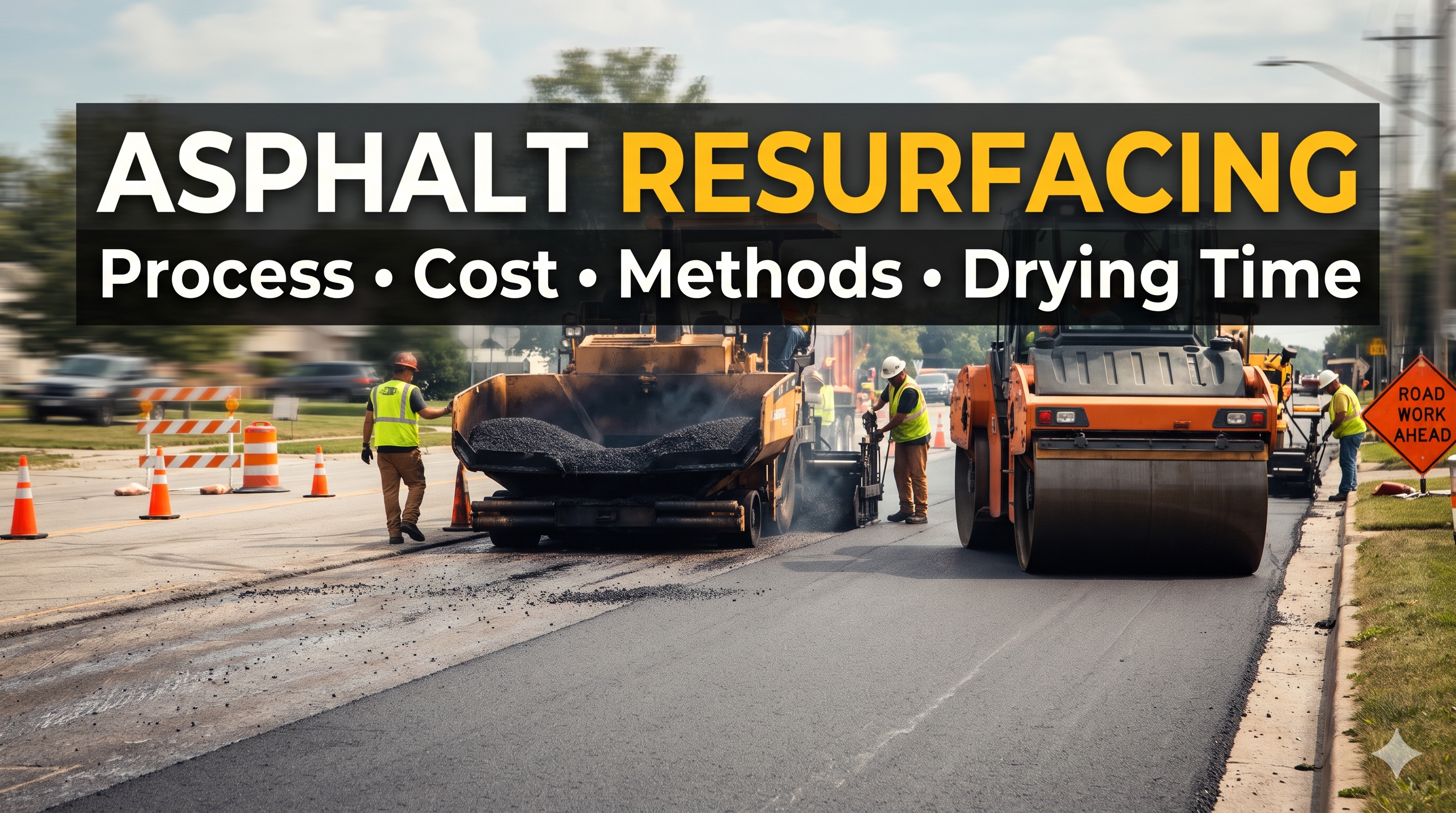
Asphalt resurfacing is the process of laying a new layer of asphalt, usually 1.5 to 2.5 inches (40 to 65 mm) thick, over an existing pavement that is worn but still structurally sound.
It restores a smooth, watertight surface for a fraction of the cost of tearing everything out.
This guide explains how resurfacing works, which method to choose, what it costs, and how long you must wait before driving on it.
Asphalt Resurfacing at a Glance
- Cost: roughly $2 to $6 per sq ft (about $22 to $65 per m²) in the US, depending on region, prep work, and thickness
- Lifespan added: typically 8 to 15 years with proper maintenance
- Time on site: 1 to 3 days for most driveways and small lots
- Ready for cars: usually 24 to 72 hours; full cure takes months
- Works only if: the base underneath is still solid
What Is Asphalt Resurfacing?
Resurfacing, also called an asphalt overlay, replaces or covers only the top (wearing) layer of a pavement. The base and sub-base stay in place.
Resurfacing pavement is most effective when the existing base is stable, and the damage is limited to the upper asphalt layer.
There are two main versions:
- Overlay: after cleaning and repairs, a new hot-mix layer is laid directly over the old surface.
- Mill and fill: a machine first grinds off the top 1.5 to 3 inches, then new asphalt is laid in its place so the finished height matches the original.
Resurfacing fixes surface problems: shallow cracking, raveling, fading, minor rutting, and small potholes. It does not fix a failed base, poor drainage underneath, or tree-root heave. Laying new asphalt over those problems only hides them for a season or two.
Should You Resurface or Replace?
The deciding factor is what is happening below the surface, not how bad the top looks. Use these checks before you call a contractor.
| Check | Resurface | Replace |
|---|---|---|
| Crack width | Under about 1/4 inch (6 mm), not spreading | Wide, deep, or edges are sinking |
| Alligator (map) cracking | Small, isolated patches | Over roughly 25% of the area |
| Rut or depression depth | Under about 1/2 inch (12 mm) | Deeper, or the surface flexes underfoot |
| Water | Drains normally | Pools after rain or soft spots appear |
| Probe test (screwdriver pushed into a crack) | Meets firm resistance | Sinks easily into soft material |
| Age | Under about 15 to 20 years | Older, with failures in several places |
If most of your answers land in the left column, resurfacing is likely the right call. If they land on the right, expect a full-depth repair or replacement, which costs more but lasts longer. A professional site visit is worth it for borderline cases.
Asphalt Resurfacing Methods Compared
Overlay is the most common option, but it is not the only one. Lifespans below are typical ranges and depend on traffic and climate.
| Method | What it is | Typical life | Relative cost | Best for |
|---|---|---|---|---|
| Hot-mix overlay | New layer over cleaned, patched pavement | 8 to 15 years | Medium | Driveways and lots with a sound base |
| Mill and fill | Grind off the top layer, then repave | 10 to 15 years | Medium to high | Sites with curbs, drains, or grade limits |
| Hot-in-place recycling | Heat, loosen, and re-lay the top layer on site | 8 to 12 years | Medium | Long roads, large areas |
| Microsurfacing or slurry seal | Thin polymer or emulsion and aggregate layer | 5 to 8 years | Low | Preservation of pavements in fair condition |
| Chip seal | Binder sprayed, then covered with stone chips | 5 to 7 years | Low | Low-speed rural roads |
| Infrared repair | Heat and rework small damaged areas | Varies | Low | Patches and utility cuts |
Thin treatments such as slurry and chip seal protect pavement that is still in fair shape. They are not structural repairs, so they cannot replace an overlay on a cracked surface.
The main asphalt driveway resurfacing options include a standard hot-mix overlay, mill and fill, and thinner surface treatments for pavement that remains in fair condition.
The Asphalt Resurfacing Process: Step by Step
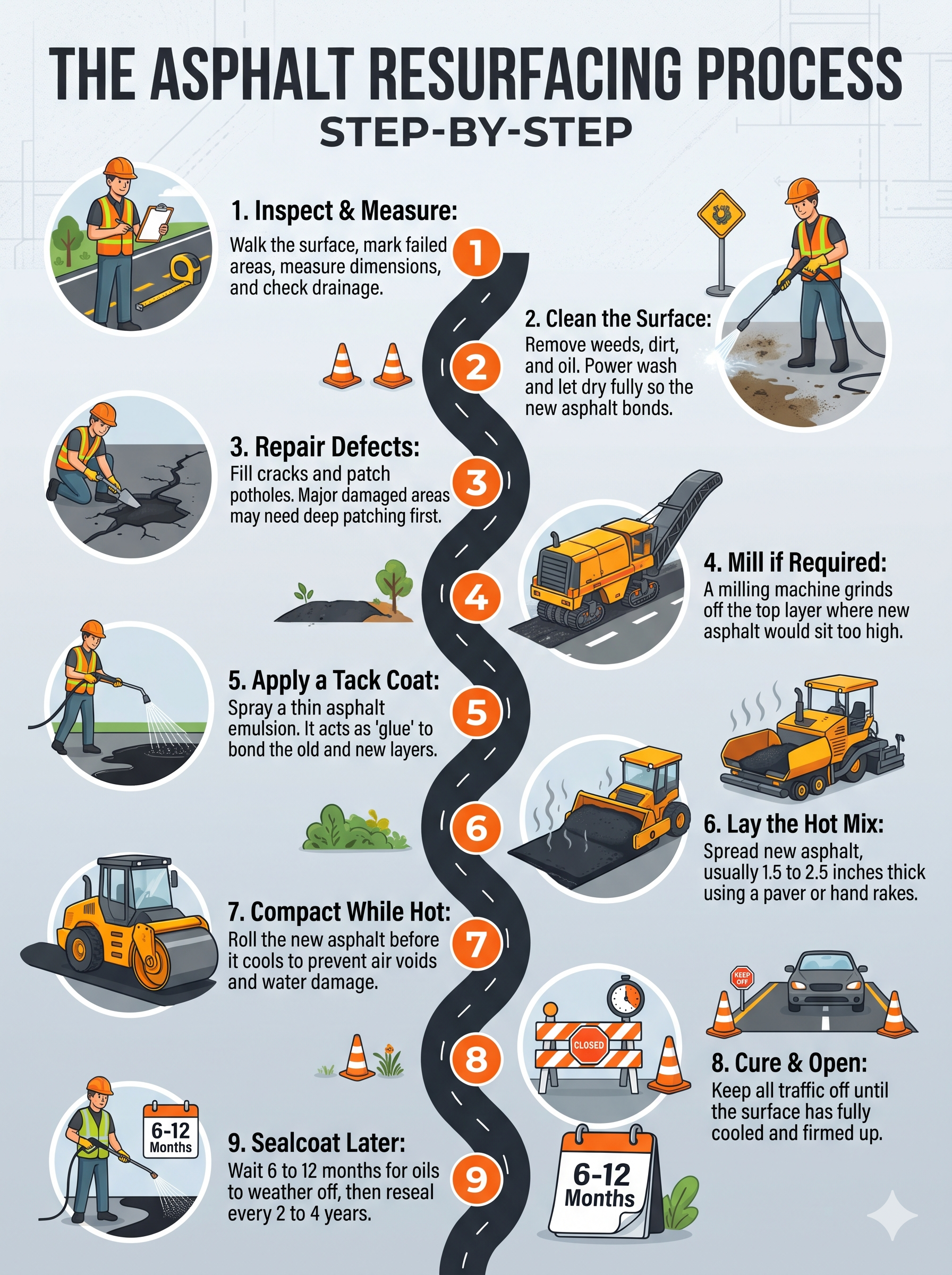
A typical resurfacing project follows these steps:
1. Inspect and measure
Walk the surface, mark failed areas, measure length and width, and check drainage. Note any curbs, garage thresholds, or drains that limit how high the new surface can sit.
2. Clean the surface
Remove weeds, dirt, oil, and loose material. Power wash and let the surface dry fully, since new asphalt will not bond to a dirty or wet surface.
3. Repair defects
Fill narrow cracks with crack filler. Cut out and patch potholes. Wide alligator-cracked areas may need paving fabric or full-depth patching before the overlay goes down.
4. Mill if required
Where the new layer would raise the surface too high, a milling machine (cold planer) grinds the top layer off first. Small DIY patches can be dug out by hand, but larger areas need the right equipment.
5. Apply a tack coat
A thin sprayed layer of asphalt emulsion glues the old surface to the new layer. Skipping it is one of the most common causes of peeling and slippage later.
6. Lay the hot mix
New asphalt is spread at the planned thickness, usually 1.5 to 2.5 inches for driveways. Residential jobs typically use a paver or spreader; very small repairs may be raked by hand.
7. Compact while hot
A roller compacts the mat before it cools. Poor compaction leaves air voids that let in water and shorten the life of the surface.
8. Cure and open
Keep traffic off until the surface has cooled and firmed up (see the drying time section below).
9. Sealcoat later
Many contractors recommend waiting 6 to 12 months before sealcoating so oils in the new mix can weather off. After that, reseal every 2 to 4 years.
Asphalt Milling and Resurfacing: When You Need Both
Asphalt milling and resurfacing go together when height is a problem. If you simply pile 2 inches of new asphalt on top of the old surface, the finished level rises. That causes trouble at garage doors, curbs, gutters, drain covers, and where the driveway meets the road.
Milling removes the damaged top layer first, typically 1.5 to 3 inches deep, so the new layer replaces it instead of stacking on top. It also removes cracked and oxidized material that could telegraph through a new overlay (called reflective cracking), and it lets crews correct the slope for better drainage.
As a rule, mill when:
- the finished height must match existing curbs, drains, or thresholds
- the top layer is badly cracked, raveled, or has deep ruts
- the pavement has already been overlaid once or twice
- You need to regrade to fix standing water
If you want to estimate how much material milling will remove, use our asphalt removal calculator.
Milling can also support material reuse. According to the National Asphalt Pavement Association (NAPA), the U.S. asphalt industry reused 101.4 million tons of reclaimed asphalt pavement (RAP) during the 2024 construction season, and more than 99% of reclaimed asphalt pavement was put back to productive use.
Asphalt Resurfacing Driveway Cost
The cost to resurface an asphalt driveway depends on the total area, asphalt thickness, local material prices, and the amount of preparation or milling required.
Cost per square foot
In the US, most contractors quote about $2 to $6 per sq ft for resurfacing. Small driveways and sites with heavy prep work sit at the top of that range, while large, simple areas sit near the bottom.
Replacement typically costs noticeably more, often $4 to $10 or more per sq ft. A rough guide for a typical 600 sq ft driveway is a few thousand dollars installed.
How is the asphalt resurfacing driveway cost calculated?
Contractors price resurfacing based on tonnage plus labor and equipment. You can do the material math yourself:
Tons of asphalt = area × thickness × density ÷ 2,000
Worked example (imperial): a 600 sq ft driveway resurfaced at 2 inches thick.
- Volume: 600 sq ft × (2 ÷ 12) ft = 100 cu ft
- Weight at about 145 lb per cu ft (compacted hot mix): 100 × 145 = 14,500 lb
- Tons: 14,500 ÷ 2,000 = about 7.25 tons
Same job in metric: 50 m² at 50 mm thick is 2.5 m³. At about 2.35 t/m³, that is roughly 5.9 tonnes.
Multiply by the local price per ton to get the material cost. For example, at $100 per ton delivered, 7.25 tons is about $725 for material alone.
The installed price is much higher because it includes trucking, paver and roller, labor, patching, and profit.
Try your own numbers in our asphalt cost calculator, or use the asphalt calculator to get tonnage for any area and thickness.
What changes the price?
- Size: small jobs cost more per sq ft because of minimum charges and mobilization.
- Thickness: every extra half inch adds tonnage.
- Prep: cleaning, crack repair, pothole patching, and milling are billed on top.
- Access: tight sites, slopes, and long haul distances raise costs.
- Material prices: asphalt cement is tied to oil prices, so quotes move with the market.
- Season and region: labor rates and plant availability vary widely.
Resurfaced Asphalt Drying Time
Asphalt does not "dry" like paint. It hardens as it cools and as the binder stiffens over time. That is why different sources give very different answers: they are describing different stages.
Resurfaced asphalt drying time varies with temperature, layer thickness, sunlight, and traffic conditions, so always follow your contractor's instructions before reopening the surface.
| Stage | Typical wait |
|---|---|
| Foot traffic | A few hours, once the surface is cool to the touch |
| Cars and light vehicles | 24 to 72 hours |
| Trucks, RVs, heavy equipment | 3 to 7 days |
| Full cure | Several months |
| Sealcoat | 6 to 12 months |
Expect longer waits in hot weather, when the surface stays soft, and for thicker layers, which hold heat longer. Shaded areas cure more slowly and sunny areas faster.
Until fully hardened, avoid turning the steering wheel while parked, park in different spots, and keep heavy loads off the edges, which are the weakest part of the new mat.
How to Resurface an Asphalt Parking Lot?
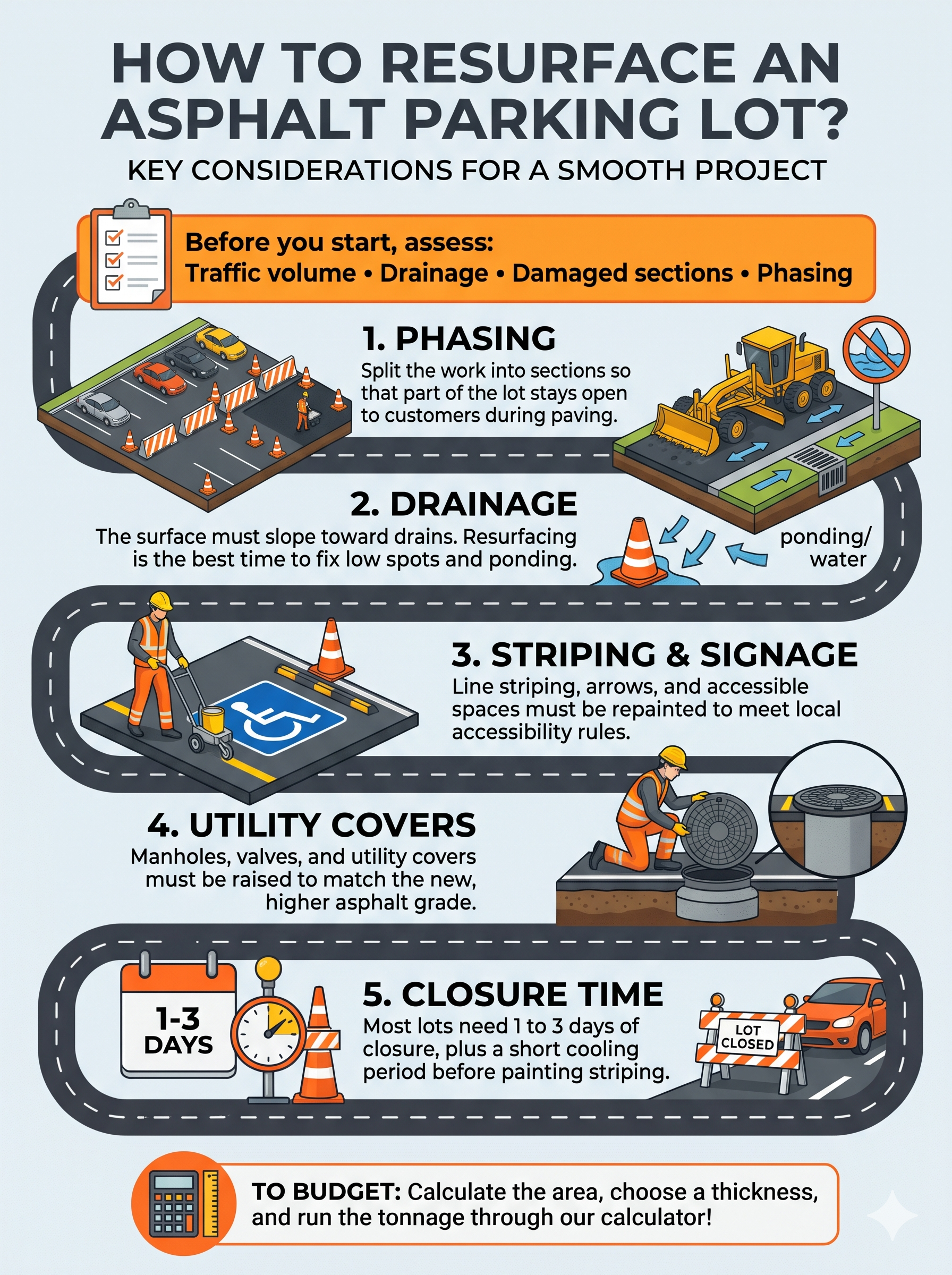
Before resurfacing an asphalt parking lot, assess traffic volume, drainage, damaged sections, and how the work can be phased to minimize disruption.
- Phasing: work is split into sections so that part of the lot stays open to customers.
- Drainage: the surface should slope toward drains. Resurfacing is the best time to fix low spots and ponding.
- Striping and signage: lines, arrows, and accessible spaces must be repainted after paving, and ramps and slopes should meet local accessibility rules.
- Utility covers: manholes and valves must be raised to the new grade.
- Closure time: most lots need 1 to 3 days of closure, plus a short cooling period before striping.
To budget a lot, calculate the area, choose a thickness, and run the tonnage through the calculators above.
Asphalt Resurfacer: The DIY Product vs a Contractor
The phrase "asphalt resurfacer" has two meanings. It can mean a contractor (or paving machine) that lays a new asphalt layer, or it can mean a liquid driveway resurfacer sold in buckets at home improvement stores.
Before choosing an asphalt resurfacer, check whether your driveway needs only a protective surface coating or a full asphalt overlay to repair more serious damage.
These liquid products are thick, filled coatings that you squeegee over the surface. They can freshen up an aging driveway with hairline cracks and cost far less than an overlay.
But they are only a few millimeters thick. They will not fix potholes, deep cracks, ruts, or base failure, and they will not add structural strength. Think of them as a heavy-duty sealer, not a replacement for resurfacing.
Maintaining Your Resurfaced Pavement
- Seal cracks as soon as they appear, before water gets in.
- Sealcoat after the first 6 to 12 months, then every 2 to 4 years. Our seal coat calculator estimates how much material you need.
- Keep edges supported with soil or gravel, and keep water draining away.
- Clean up oil and fuel spills promptly.
Final Thoughts
Resurfacing is the most cost-effective way to extend the life of asphalt that is worn but not failing. Check the base first, choose the right method, and understand where your quote comes from.
Start with tonnage using our asphalt calculator and then run the numbers through the asphalt cost calculator before you call for quotes.
Disclaimer: figures are general estimates. Costs, densities, and cure times vary by region, mix, and weather. Confirm details with a local contractor.
Frequently Asked Questions
Yes, if the old pavement is structurally sound. That is what an overlay is. Damaged areas should be repaired first, and a tack coat is needed for bonding.
Most driveways get 1.5 to 2 inches, and commercial lots 2 to 2.5 inches. The layer should be at least about two to three times the size of the largest stone in the mix, or it will not compact properly.
Typically 8 to 15 years with sealing and crack repair. Heavy traffic, poor drainage, and harsh freeze-thaw climates shorten it.
Usually not. Hot mix needs warm, dry conditions, and most contractors avoid paving when air and ground temperatures are low. Check with your local plant and contractor.
Yes. Resurfacing is commonly quoted at roughly 30 to 50% less than full replacement, as long as the base is sound.